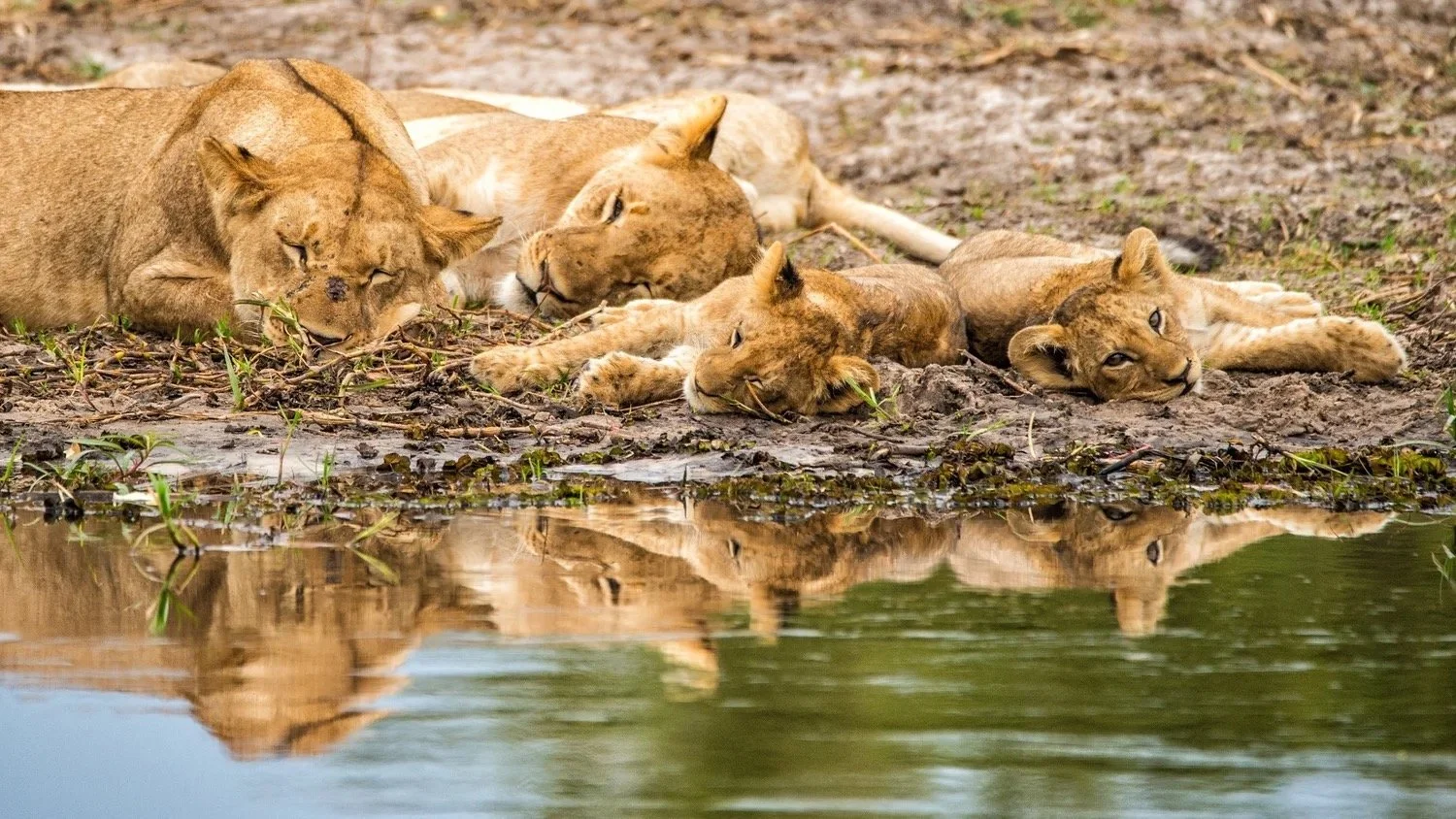
If you want a safari that feels truly wild, Botswana is where I send you.
It's a country of small camps, few vehicles and huge open spaces, from the waterways of the Okavango Delta to the salt pans of the Kalahari.
Here's what to know as you plan.
Why Botswana
- Fewer people. Most camps are small and remote, and many sit on private land where only their guests can drive. Outside the Chobe riverfront, it rarely feels busy.
- More ways to explore. In the private areas you can go off-road to follow animals, head out on night drives and walk with a guide.
- Water and desert in one trip. Gliding through the Delta in a mokoro (a traditional dugout canoe) and sitting on the edge of a salt pan feel like two different countries.
- Wonderful wildlife. Elephants, lions, leopards and cheetahs, plus a real chance at African wild dogs.
Water, River or Desert?
Most Botswana trips combine two or three of these areas, and each one feels completely different.
The Okavango Delta
The world's largest inland delta, with mokoro trips, boat rides, game drives on the islands and some of the most beautiful camps in Africa
Chobe and the North
Huge elephant herds, boat safaris on the Chobe River, and remote private areas like the Linyanti that are known for predators
The Kalahari and the Pans
Endless open space, the Makgadikgadi salt pans, and a desert that comes alive with zebra and wildebeest in the green season
One camp on the water, one on land: the best of Botswana.
Where to Go in Botswana
- Okavango Delta: the heart of a Botswana safari. The private concessions offer off-road driving, night drives and walks, along with mokoro trips through the channels.
- Moremi Game Reserve: the protected reserve inside the Delta, with excellent game viewing on both land and water.
- Chobe National Park: famous for its elephants. A boat safari on the Chobe River at sunset is a highlight, and it's the easiest jump to Victoria Falls.
- Linyanti and Savute: remote areas between the Delta and Chobe, loved for big cats, wild dogs and elephants.
- Makgadikgadi and Nxai Pans: vast salt pans that are at their best in the green season, when the zebra and wildebeest arrive.
- Central Kalahari: a true desert experience, best from about December to May, with the chance to spend time with San guides.
When to Go
The dry season, roughly May to October, is the classic time to go. The animals gather around the water, and the Delta's camps are at their best.
Here's the surprise: the Okavango floods during the dry season. The water arrives from the Angolan highlands months after the rain, so the Delta is at its highest from about July to October. That's perfect for mokoro trips.
September and October get very hot. From November to March it's green season, with afternoon storms, baby animals, lower rates and the Kalahari and the pans at their best. Some camps close for part of January to March.
See my full month-by-month safari guide for every country.
Malaria
Northern Botswana, including the Delta and Chobe, is a malaria area, and the risk is highest from November to March. Talk to your doctor or a travel clinic before you go.
Traveling with young children? South Africa has wonderful malaria-free reserves, and I'm happy to help you compare.
How Long to Go
Plan on 8 to 10 days. That gives you time for two or three camps, often one water camp and one or two land camps.
You'll fly between camps in small planes, so bags are soft-sided and weight is limited. My safari packing list covers what to bring.
Pricing varies by camp and season, and I'll give you real numbers once I know your dates.
Add Victoria Falls
Victoria Falls is a short trip from Chobe, which makes it an easy and popular way to start or finish a Botswana safari. Two nights is perfect for seeing the falls, a sunset cruise on the Zambezi and a little time to relax.
My Biggest Advice
Book early. The best Delta camps are small, and for July to October I recommend booking 12 to 18 months ahead.
And mix your camps. One camp on the water and one on dry land gives you the best of Botswana in a single trip.
keep planning
Ready to start planning your safari?
Plan My Safari