Namibia is unlike any other safari country.
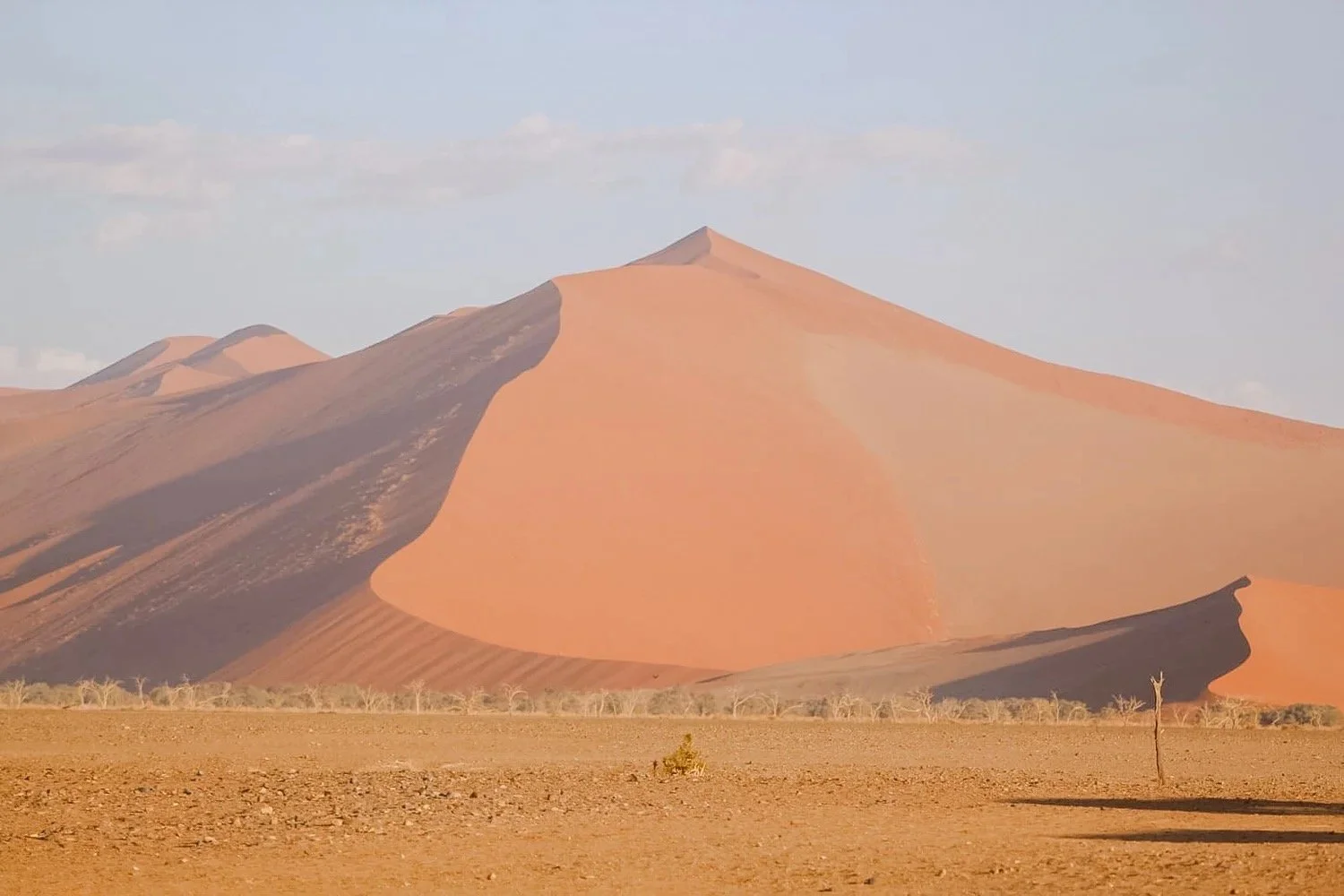
It's red dunes and white clay pans, a foggy coastline lined with shipwrecks, elephants that live in the desert and waterholes full of wildlife. I spent 11 days there, and it's one of the most memorable trips I've ever taken.
Here's what to know as you plan.
Why Namibia
- The scenery. Namibia is about the landscapes as much as the animals, and they're unforgettable.
- Unique wildlife. Desert-adapted elephants and giraffes, seal colonies on the coast, and classic game viewing in Etosha.
- Adventure. Hot-air balloon rides, quad biking in the dunes, scenic flights and walks with a guide.
- Some of Africa's most unique lodges. From cabins built to look like shipwrecks to camps tucked into hidden valleys.
Where to Go in Namibia
- Sossusvlei and the Namib Desert: the red dunes you've seen in pictures, plus Deadvlei, the white clay pan with its ancient camel thorn trees. A sunrise balloon ride here was the highlight of my trip.
- Swakopmund and the coast: a seaside town where the desert meets the Atlantic, with catamaran trips to see seals, dolphins and pelicans.
- The Skeleton Coast: wild, remote and beautiful, with dunes running right into the ocean. Flying along it is an experience on its own.
- Damaraland and the Hoanib: rugged valleys and dry riverbeds, home to desert-adapted elephants, plus ancient rock art at Twyfelfontein.
- Etosha National Park: Namibia's top park for wildlife, built around a huge salt pan. In the dry season the animals gather at the waterholes, and some lodges have floodlit waterholes you can watch after dark.
- The Zambezi Region: the green, watery northeast (once called the Caprivi Strip), with rivers, boat trips and an easy link to Botswana and Victoria Falls.
Namibia rewards a slower pace.
Fly-In or Drive?
Fly-in safari
Small private planes between regions. Namibia is huge, and flying means more time at the lodges and less time on the road. This is how I traveled, and what I recommend for most clients.
Self-drive
Namibia is one of the best self-drive countries in Africa, with good roads and great lodges along the way. It's a wonderful option for adventurous travelers with more time.
When to Go
May to October is the best time for most of Namibia. It's dry and sunny, and in Etosha the animals gather at the waterholes. July to October is the busiest season, and desert nights can drop to about 7°C (45°F), so bring warm layers.
November to April is the hotter, wetter season. The landscape turns green and there are fewer people, but wildlife is harder to spot in Etosha. I traveled in November and loved it.
See my full month-by-month safari guide for every country.
Malaria
Northern Namibia, including Etosha and the Zambezi Region, has a medium malaria risk, highest from November to April. Most of the rest of the country is low risk or malaria-free. Talk to your doctor or a travel clinic before you go.
How Long to Go
Plan on 10 to 12 days. Namibia is big, and that gives you time for the desert, the coast and Etosha without rushing.
Pricing varies by camp and season, and I'll give you real numbers once I know your dates.
Namibia also pairs beautifully with Botswana, Victoria Falls or a few days in Cape Town.
My Biggest Advice
Don't try to see it all in a week. Namibia rewards a slower pace, and the best moments, like sunrise over the dunes or a quiet evening under the stars, happen when you're not racing to the next stop.
keep planning
Ready to start planning your safari?
Plan My Safari