When most people picture an African safari, they're picturing East Africa: endless golden plains, acacia trees and huge herds of wildebeest on the move.
That's Kenya and Tanzania. Together they're home to the Great Migration, and they're the classic choice for a first safari.
Here's how the two compare, and how I help clients decide.
Kenya or Tanzania?
You really can't go wrong with either, and it's easy to combine the two. The Masai Mara in Kenya and the Serengeti in Tanzania are actually one connected ecosystem, and the migration moves between them through the year.
Kenya
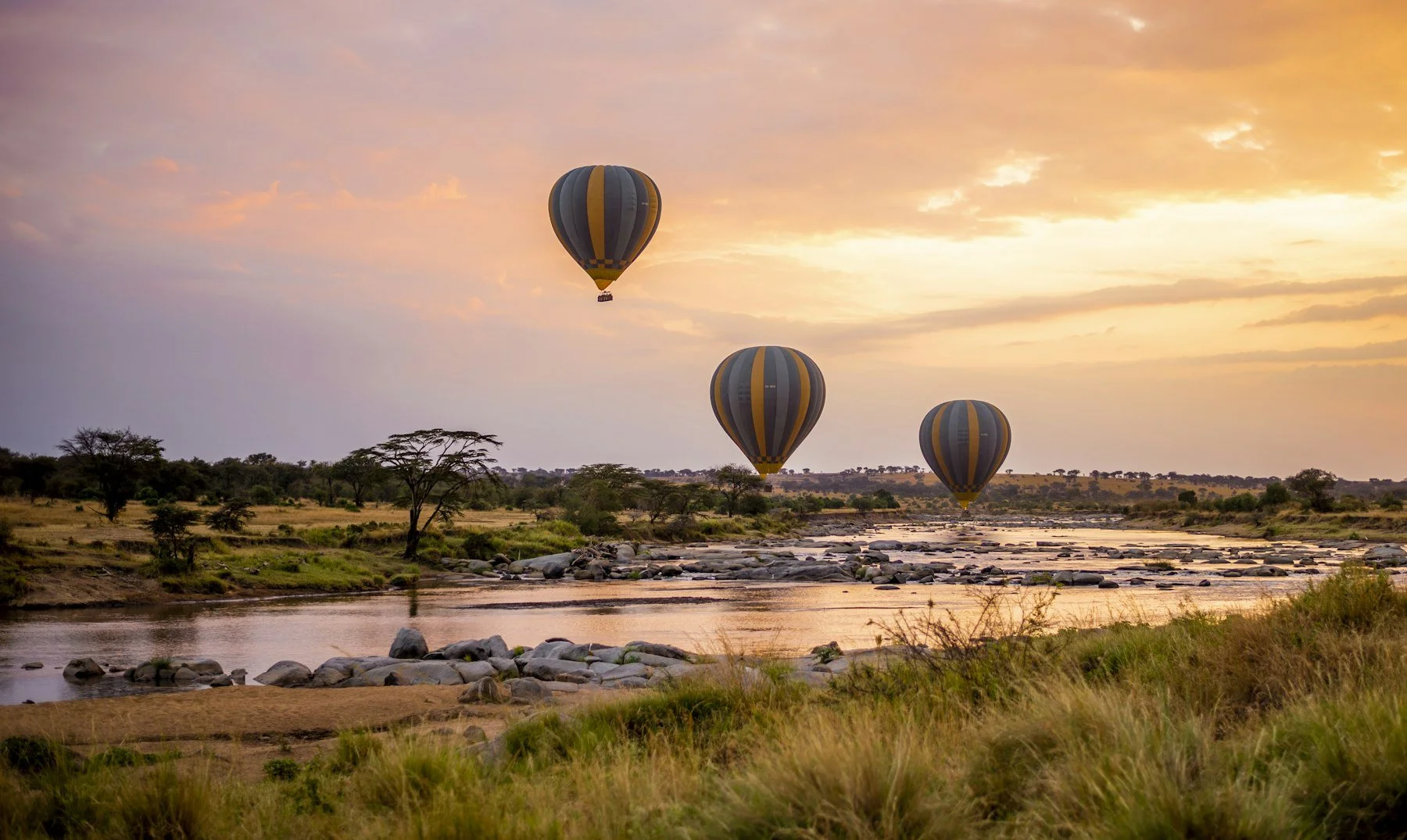
The Masai Mara for big cats and river crossings, hot-air balloon safaris, private conservancies, and easy add-ons like Amboseli's elephants under Kilimanjaro
Tanzania
The vast Serengeti, the Ngorongoro Crater, calving season in January and February, and the beaches of Zanzibar to finish
Where to Go in Kenya
- Masai Mara National Reserve: Kenya's most famous park, known for lions, leopards and cheetahs, and the migration from about July to October. The private conservancies around it offer night drives, walking safaris and far fewer vehicles.
- Amboseli National Park: big elephant herds with Mount Kilimanjaro as the backdrop.
- Samburu National Reserve: a drier, more remote landscape in the north, with species you won't see in the Mara.
River crossings are never guaranteed, which is part of what makes seeing one so special.
Where to Go in Tanzania
- Serengeti National Park: the heart of the Great Migration, with excellent game viewing all year. Different areas are best in different months.
- Ngorongoro Crater: an enormous volcanic crater packed with wildlife, where you can see the Big Five in a single day. It's best as a full-day game drive with a picnic lunch.
- Tarangire and Lake Manyara: smaller parks that pair well with the Serengeti and Ngorongoro, known for elephants.
- Nyerere and Ruaha: remote southern parks for travelers who've already done the classics, and two of the best places to look for wild dogs.
Where the Great Migration Is, Month by Month
The herds follow the rain, so the timing changes a little every year. River crossings are never guaranteed, which is part of what makes seeing one so special.
When to Go
June to October is the classic dry season, with the best game viewing and the migration in the north. January and February are wonderful too, especially for calving in Tanzania.
April and May bring the long rains. It's low season, with lower rates and fewer people, but some camps close.
See my full month-by-month safari guide for every country.
How Long to Go
Plan on a minimum of 8 days. That gives you time for two or three camps without spending your whole trip in transit.
Pricing varies by camp and season, and I'll give you real numbers once I know your dates.
Finish on the Beach
After a safari in Tanzania, Zanzibar is just a short flight away. It's the perfect place to slow down for a few days, and a favorite add-on for honeymooners.
My Biggest Advice
Decide what you want to see first. If seeing a river crossing is at the top of your list, go in August or September. If you'd love baby animals and fewer people, look at January and February in Tanzania. I'll help you match the month, the parks and the camps.
keep planning
Ready to start planning your safari?
Plan My Safari